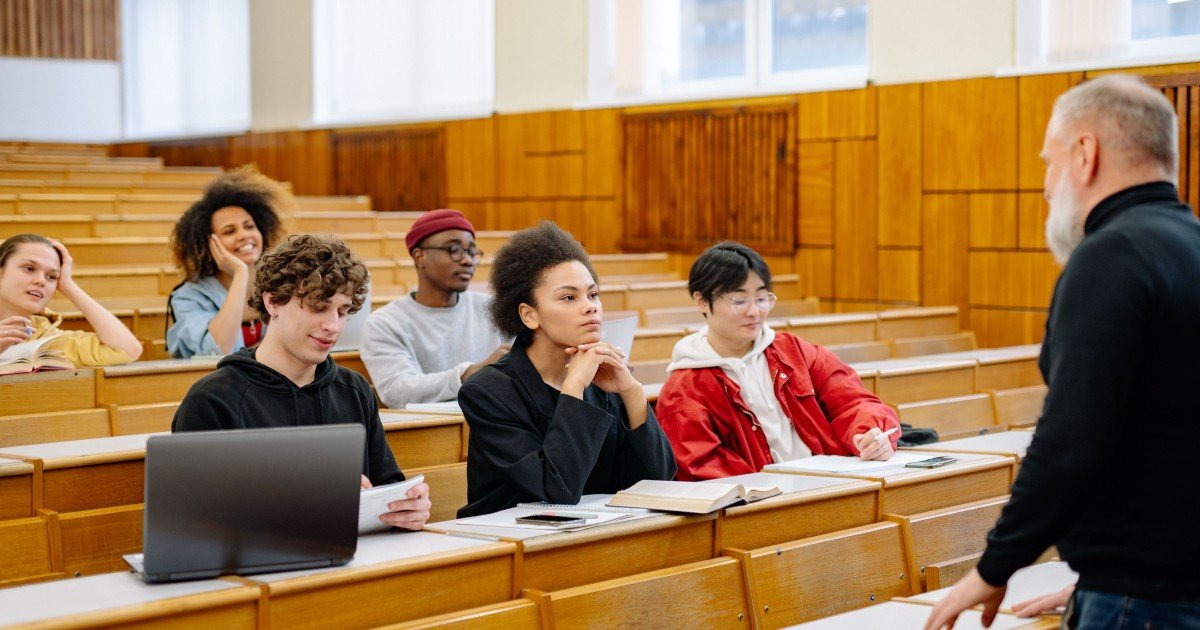
Learning does not have to end when school, college, or university does. In fact, how can people continue learning after formal education is becoming an increasingly important question in a world where careers, technology, communication, and everyday life keep changing. A degree or diploma can provide a strong foundation, but it is only one stage of a much longer learning journey. After formal education, people can continue learning through reading, online courses, practical experience, mentorship, hobbies, professional training, conversations, and self-directed study.
Think about someone who graduates with a degree and then spends the next ten years doing exactly the same things in exactly the same way. Now compare that person with someone who regularly learns new tools, reads about their industry, experiments with new ideas, asks questions, and develops skills outside their original field. Their educational qualifications may look similar on paper, but their knowledge, confidence, adaptability, and opportunities can become very different over time.
The good news is that continuing education does not require returning to a classroom full-time. Modern learning can fit around a job, family, travel, personal interests, and other responsibilities. The key is to develop a mindset in which learning becomes part of everyday life rather than something that belongs only to childhood or university.
This guide explores practical and realistic ways people can continue learning after formal education, why lifelong learning matters, what methods work best, and how to turn curiosity into meaningful personal and professional growth.
What Does Learning After Formal Education Really Mean?
Continuing to learn after formal education means deliberately developing knowledge, skills, understanding, and abilities outside a traditional full-time school or university environment.
It can be structured or informal.
For example, someone might enroll in a professional certification program. Another person might learn photography by practicing every weekend. Someone else might read books about economics, follow developments in technology, learn another language, attend workshops, or improve their communication skills through everyday practice.
This broader approach is often called lifelong learning.
Lifelong learning does not mean studying constantly. It means remaining open to acquiring knowledge throughout different stages of life.
Formal, Non-Formal, and Informal Learning
Learning after graduation can take several forms.
Formal learning includes:
- University courses
- Professional degrees
- Diplomas
- Certifications
- Vocational programs
- Accredited training
Non-formal learning may include:
- Workshops
- Seminars
- Short courses
- Professional training
- Community classes
- Industry conferences
Informal learning happens through:
- Reading
- Podcasts
- Conversations
- Observation
- Personal projects
- Work experience
- Travel
- Hobbies
- Experimentation
The important point is that valuable learning can happen in all three categories.
A person does not need a certificate for every useful thing they know.
Why Is Continuing to Learn Important After Graduation?
Formal education provides knowledge, but knowledge does not remain permanently complete.
Industries change. New technologies appear. Social expectations evolve. Scientific understanding develops. New professions emerge while some traditional roles become less important.
That means the ability to learn can become just as valuable as what a person already knows.
The World of Work Keeps Changing
A person may graduate with skills that are highly useful today but less relevant several years later. New software, automation, artificial intelligence, communication tools, business models, and workplace practices can change how jobs are performed.
Continuing to learn helps people respond rather than simply react.
For example, an accountant may learn modern data-analysis tools. A teacher may explore digital learning methods. A designer may study new creative technologies. A business owner may learn about online customer behavior.
The goal is not to chase every new trend.
The goal is to understand which changes matter and develop the skills needed to work effectively within them.
Learning Builds Adaptability
Adaptability is not simply knowing many facts. It is being comfortable with the process of learning something unfamiliar.
Someone who has regularly learned new subjects may become less intimidated when confronted with a new system, tool, responsibility, or challenge.
That is one reason continuing education can have benefits beyond the specific subject being studied.
Learning how to learn can become a transferable skill.
1. Read Regularly and Read Beyond Your Profession
Reading remains one of the simplest ways to continue learning.
The mistake many people make is reading only information directly related to their job. Professional knowledge is important, but broader reading can create connections that narrow specialization sometimes misses.
Consider reading across several categories:
- History
- Science
- Psychology
- Business
- Technology
- Literature
- Philosophy
- Economics
- Biography
- Culture
- Communication
Reading different subjects gives the mind more ideas to connect.
A person who studies business and psychology, for example, may develop a deeper understanding of how people make decisions. Someone who reads history and technology may become better at recognizing how innovation affects society.
Read Actively, Not Just Frequently
Reading more does not automatically mean learning more.
Active reading involves asking questions such as:
What is the central idea?
Why does the author believe this?
What evidence supports the argument?
Do I agree with it?
How could this idea apply to real life?
What should I investigate further?
Taking brief notes can also help transform passive reading into active learning.
For readers interested in developing a stronger curiosity-driven learning habit, the article How Does Curiosity Improve the Learning Process? provides another useful perspective on why asking questions can strengthen the learning process.
2. Take Online Courses and Short Training Programs
One of the biggest advantages of modern education is flexibility.
People can now learn subjects from home, during evenings, on weekends, or during small pockets of free time. Online learning can be particularly useful for people who cannot commit to a traditional academic schedule.
Possible areas include:
- Digital marketing
- Programming
- Data analysis
- Graphic design
- Writing
- Finance
- Project management
- Languages
- Entrepreneurship
- Public speaking
- Professional communication
The best course is not necessarily the longest or most expensive one.
A short course that teaches one useful skill and gives you opportunities to practice it may be more valuable than a large collection of courses that you never complete.
Choose Courses With a Clear Purpose
Before starting a course, ask:
What do I want to be able to do when I finish?
If the answer is specific, learning becomes easier to evaluate.
Instead of saying, “I want to learn technology,” a stronger goal might be, “I want to understand how data visualization works so I can create clearer reports.”
Specific goals create direction.
3. Learn Through Practical Projects
One of the most effective ways to continue learning is to build something.
Reading about a subject gives you concepts. A project forces you to use them.
Someone learning photography might create a small photo series. A person studying web development could build a simple website. Someone interested in writing could start publishing short articles. A budding entrepreneur might develop a basic business plan.
Projects expose gaps in knowledge.
You may think you understand something until you actually try to use it.
That is not failure. It is useful information.
Why Practice Changes Learning
Practical work creates a feedback loop:
Learn → Try → Make mistakes → Adjust → Try again → Improve
This process often produces deeper understanding than consuming information alone.
It also develops confidence because knowledge becomes connected to action.
4. Learn From Other People
Formal classrooms are not the only places where teachers exist.
People can learn from colleagues, mentors, friends, family members, professionals, community members, and even people with very different backgrounds.
A good conversation can introduce an idea that would never have appeared in your usual information sources.
Find People Who Know More About Something You Want to Learn
Mentorship can be particularly valuable because experienced people can explain not only what works but also what commonly goes wrong.
For example, someone learning business might benefit from speaking with an experienced entrepreneur. Someone beginning a career in design could learn from a senior designer. A person trying to improve public speaking could observe skilled speakers and ask for feedback.
Learning from others can shorten the distance between theoretical knowledge and practical understanding.
5. Develop Curiosity as a Daily Habit
Curiosity is one of the most powerful tools for lifelong learning.
Instead of accepting every unfamiliar idea with “I don’t know,” try asking:
Why does this happen?
How does it work?
What caused it?
What would happen if something changed?
Where can I learn more?
Curiosity turns ordinary experiences into learning opportunities.
A news story can lead to an exploration of history. A workplace problem can lead to research. A conversation can introduce a new field of knowledge. A travel experience can inspire learning about another culture.
Curiosity keeps learning connected to real life.
6. Learn Through Travel and New Experiences
Travel is often associated with relaxation, but it can also become a powerful educational experience.
Visiting a new place exposes people to different languages, customs, food, architecture, transportation systems, social practices, landscapes, and historical traditions.
Even when travel is not possible, people can deliberately seek unfamiliar experiences locally.
Visit a museum. Attend a cultural event. Explore a historical neighborhood. Speak with someone from a different professional background. Try a new hobby.
The purpose is not simply to collect experiences.
It is to challenge familiar assumptions.
For people interested in exploring new destinations while developing a broader understanding of the world, resources such as Best Countries for Solo Travel can also encourage learning through independent travel and cultural exploration.
7. Learn a New Language
Language learning is another excellent form of continuing education.
A new language introduces more than vocabulary and grammar. It can reveal different cultural expressions, communication styles, humor, traditions, and ways of describing the world.
Language learning also provides a practical reason to keep practicing.
You can learn through:
- Conversation practice
- Reading simple stories
- Listening to audio
- Watching films
- Writing short passages
- Flashcards
- Language classes
- Everyday conversations
Progress can be slow at first. That is normal.
The most important thing is consistency.
Ten or fifteen minutes of regular practice can be more sustainable than studying intensively once every few weeks.
8. Turn Your Job Into a Learning Environment
Work itself can become a source of education.
Every professional environment contains lessons that may not appear in textbooks.
You can learn by:
- Asking experienced colleagues questions
- Taking responsibility for unfamiliar tasks
- Studying how decisions are made
- Requesting constructive feedback
- Observing customer behavior
- Reviewing mistakes
- Learning from successful projects
- Understanding how different departments work
The workplace can teach judgment, communication, organization, negotiation, teamwork, and problem-solving.
For deeper development, it can be useful to deliberately identify the skills you use every week and ask which ones could be improved.
9. Improve Problem-Solving and Reasoning Skills
Learning is not only about collecting information.
It is also about becoming better at using information.
Problem-solving helps people analyze situations, identify possible causes, compare solutions, and make decisions.
You can strengthen these abilities through puzzles, practical projects, strategic games, writing exercises, professional challenges, and deliberate reflection.
Learning more about how to develop better problem-solving skills can complement a lifelong learning strategy because knowledge becomes much more useful when people know how to apply it.
Logical reasoning is equally important. Rather than accepting an argument simply because it sounds convincing, ask what evidence supports it and whether the conclusion actually follows from the information provided.
10. Use Technology as a Learning Tool
Technology has made self-directed learning easier, but it also requires judgment.
People now have access to an enormous amount of educational content. The challenge is determining what deserves attention.
Useful digital learning methods include:
- Online lectures
- Educational videos
- Digital libraries
- Interactive courses
- Audiobooks
- Podcasts
- Virtual workshops
- Educational communities
- Digital note-taking systems
Technology should support learning rather than replace thinking.
For example, using an AI tool to explain an unfamiliar concept can be useful. But understanding the explanation, checking important information, asking follow-up questions, and applying the idea independently remain essential.
The strongest approach is not simply consuming more digital content. It is using technology to make learning more active and deliberate.
11. Build a Personal Learning System
One reason people stop learning is that they rely entirely on motivation.
Motivation changes.
A better approach is to create a simple system.
Choose One Learning Goal
Do not try to master five subjects simultaneously.
Pick one meaningful goal.
For example:
“I want to become better at professional writing.”
Then break it into smaller actions.
Read one article each week. Write twice a week. Study strong examples. Ask someone for feedback. Review your progress monthly.
Small actions accumulate.
Keep a Learning Journal
A learning journal can contain:
- New ideas
- Questions
- Mistakes
- Useful resources
- Skills practiced
- Lessons learned
- Future topics to explore
Writing things down encourages reflection.
It also makes progress visible.
Teach What You Learn
One of the strongest tests of understanding is the ability to explain an idea clearly.
Try teaching a concept to a friend, colleague, student, or even yourself.
If you cannot explain something simply, there may still be gaps in your understanding.
Teaching also encourages you to organize knowledge instead of merely remembering isolated facts.
12. Learn in Ways That Match Your Personality
There is no single perfect learning method for everyone.
Some people enjoy reading. Others learn better through demonstrations. Some prefer discussion, while others need hands-on practice.
Understanding personal learning preferences can help make education more effective and sustainable. The broader topic of why different people learn in different ways is especially relevant when designing a personal learning routine.
However, it is also useful to avoid putting yourself into a rigid category.
A person who prefers videos can still benefit from writing notes. Someone who enjoys reading can improve understanding through practice.
The best learning strategy often combines several methods.
13. Make Learning a Part of Everyday Life
You do not need to create an elaborate schedule.
Learning can be integrated into ordinary routines.
For example:
Morning: Listen to an educational podcast.
Lunch break: Read a few pages of a book.
Evening: Practice a skill for twenty minutes.
Weekend: Work on a personal project.
Monthly: Review what you learned and choose the next goal.
This approach makes education feel less like another obligation and more like a normal part of life.
Consistency matters more than intensity.
What Are the Biggest Barriers to Lifelong Learning?
Even people who value education can struggle to continue learning.
Lack of Time
Work and family responsibilities can make study difficult.
The solution is often not finding several free hours. Instead, identify smaller periods that can be used effectively.
Lack of Direction
People sometimes collect courses and books without knowing what they actually want to achieve.
A clear goal can eliminate unnecessary learning.
Fear of Being a Beginner
Adults may hesitate to learn something new because they are uncomfortable making mistakes.
Being inexperienced is not a weakness. It is the starting point of skill development.
Information Overload
There is too much educational content available.
Choosing fewer high-quality resources can be more effective than constantly searching for new ones.
Inconsistent Practice
Starting is easy. Continuing is harder.
A realistic schedule helps turn enthusiasm into a habit.
How Can Adults Create a Lifelong Learning Plan?
A practical lifelong learning plan can be built around five questions.
1. What Do I Want to Know?
Choose a subject that genuinely interests you.
2. Why Do I Want to Learn It?
A strong reason makes it easier to continue.
3. What Skill Should I Develop?
Turn broad interests into specific abilities.
4. How Will I Practice?
Choose books, courses, projects, conversations, or other methods.
5. How Will I Know I Am Improving?
Create a simple measure.
For example, if you are learning public speaking, record yourself once a month. If you are learning a language, hold increasingly difficult conversations. If you are learning coding, build progressively more complex projects.
Progress becomes easier to recognize when it is observable.
The Difference Between Learning and Simply Consuming Information
This distinction matters.
Scrolling through educational videos does not necessarily mean you are learning.
Reading dozens of articles does not guarantee understanding.
Saving hundreds of resources does not create expertise.
Learning requires some combination of attention, understanding, practice, reflection, and application.
A useful question after consuming educational content is:
“What can I now do, explain, question, or understand that I could not before?”
If the answer is nothing, the information may not have been transformed into meaningful knowledge yet.
How Lifelong Learning Can Improve Future Opportunities
Continuing education can support career development, but its benefits can extend beyond employment.
It can help people:
- Adapt to change
- Communicate more effectively
- Make better decisions
- Explore new careers
- Build confidence
- Understand different perspectives
- Develop creative abilities
- Solve problems
- Become more independent
- Discover new interests
It can also change how people see themselves.
Someone who once thought, “I am not good at technology,” may discover through practice that they can learn digital tools. Someone who believed they were not creative may find satisfaction in writing, music, design, or photography.
Learning can therefore expand not only what a person knows but also what they believe is possible.
FAQs About
How can people continue learning after formal education?
People can continue learning through books, online courses, professional training, workshops, mentorship, practical projects, hobbies, travel, language learning, workplace experience, podcasts, and self-directed study. The most effective approach is usually consistent and connected to a meaningful goal.
Is lifelong learning necessary for career success?
It is not a guarantee of career success, but continued learning can help people adapt to changing technologies, workplace expectations, and professional requirements. Developing new skills can also create opportunities to take on different responsibilities.
Can I continue learning without going back to college?
Yes. College is only one form of education. People can learn through online courses, books, workshops, professional communities, practical experience, independent projects, and many other methods.
How much time should I spend learning every day?
There is no universal amount. A realistic routine is usually better than an ambitious schedule that cannot be maintained. Even a short, focused learning session can be useful when practiced consistently.
What is the best way to become a lifelong learner?
Start with genuine curiosity, choose clear learning goals, use reliable resources, practice what you study, reflect on your progress, and remain willing to learn from other people. Consistency is more important than trying to learn everything at once.
Can hobbies count as lifelong learning?
Absolutely. Hobbies can develop creativity, technical abilities, communication, discipline, cultural understanding, and practical skills. Learning does not have to be connected to a job to have value.
How can I stay motivated to learn?
Connect learning to something meaningful. Instead of setting a vague goal such as “learn more,” choose a specific outcome, such as learning conversational Spanish, improving writing, understanding personal finance, or building a website. Visible progress can make continued learning easier.
Is reading enough for lifelong learning?
Reading is valuable, but it is most effective when combined with reflection and application. Discussing ideas, practicing skills, solving problems, writing, teaching others, and completing projects can deepen what you learn from books.
Formal education may provide the foundation, but it does not have to define the limits of what a person can learn. The question of how can people continue learning after formal education has a surprisingly simple answer: stay curious, choose meaningful subjects, practice regularly, learn from other people, and make education part of everyday life.
The modern world gives people more opportunities to learn than ever before, but opportunity alone is not enough. The real advantage comes from using those opportunities thoughtfully.
You do not need to become an expert in everything. You do not need to collect endless certificates. You do not need to study for hours every day.
Choose something that matters to you. Read about it. Ask questions. Practice it. Make mistakes. Talk to people who know more. Apply what you learn. Then choose the next thing.
That is what makes lifelong learning powerful.
Education can begin in a classroom, but it can continue in a workplace, a library, a conversation, a journey, a hobby, a personal project, or a quiet evening spent wondering how something works.
The goal is not simply to know more.
It is to remain capable of learning, adapting, questioning, and growing throughout life.
Disclaimer: This article is provided for general educational and informational purposes only. Learning methods and outcomes vary from person to person, so readers should choose educational resources and learning strategies according to their individual goals, circumstances, and needs.





Leave a Reply